


Aluminum CNC Machining
Fast, precise machining across the alloys engineers use most.

Aluminum CNC Machining at JUDA Technology
Aluminum is the most-machined material on our floor — roughly 60% of our CNC volume by part count. We stock all common aerospace and general-purpose aluminum alloys, run them at high speed on dedicated cells, and finish them with the full range of post-processing (anodizing, hard-coat, plating, powder coat, polishing). For most prototypes and production runs in aluminum, JUDA delivers in 24-72 hours for prototypes and 7-15 business days for batches of 10-500 parts.
This page covers our aluminum capabilities by alloy, when to choose each, and what you get in our quote.
Aluminum Alloys We Stock and Machine
6061-T6 — The all-purpose workhorse
The most common engineering aluminum. Heat-treatable, weldable, anodizes beautifully, machines like butter. Use for general structural, electronics enclosures, automotive brackets, hobby projects. Tensile: ~310 MPa. Yield: ~275 MPa.
6082-T6 — European 6061
Similar to 6061 with slightly higher strength (340 MPa tensile), available in metric stock sizes. Preferred in European and Asian markets for structural work.
7075-T6 — Aerospace high-strength
Zinc-aluminum alloy with steel-like strength (570 MPa tensile, 505 MPa yield) at one-third the weight. Used in aerospace structural components, defense, high-performance bicycle frames, gun receivers. NOT weldable — designs must accommodate fastener or rivet joining. Anodizes well; expect slightly different color tones than 6061.
2024-T4/T351 — Aerospace fatigue-resistant
Copper-aluminum alloy. Tensile ~485 MPa. Slightly less strong than 7075 but better fatigue resistance — used in aircraft skins, wing structures. Poorer corrosion resistance than 6061/7075 (often clad or anodized).
ADC12 (A380) — Die casting aluminum
Aluminum-silicon-copper for die-cast housings, motor mounts, transmission cases. We machine post-cast features (precision bores, threads, mating surfaces). Often combined with our casting subcontract partners for one-stop cast+machined parts.
5052, 5083 — Marine and forming grades
Magnesium-aluminum alloys. Excellent saltwater corrosion resistance. 5052 for marine hardware and fuel tanks; 5083 for shipbuilding and marine welded structures.
Cast and Plate alloys on request
MIC-6 cast plate (dimensional stability for tooling), 6063 (extrusion alloy), 1100 (pure aluminum for electrical/thermal), and others — contact us for availability.

Why Aluminum Machines So Fast
Aluminum’s properties make it ideal for high-speed machining:
Low cutting forces
large depths of cut and high feed rates are possible without machine deflection
Good thermal conductivity
heat leaves the cut zone in the chip, not the part
Easy chip breaking
proper geometry produces clean broken chips, no bird-nesting
Forgiving of suboptimal tool paths
even mediocre programming produces acceptable surface finish
On our 5-axis cells we run 6061 at 18,000-24,000 RPM with 7-12 mm depth of cut and 6+ m/min feed rates. A part that takes 90 minutes on a 3-axis VMC might run in 25 minutes on our 5-axis with proper programming.
Surface Finishes for Aluminum
As-machined
Ra 0.8-1.6 µm typical. Ra 0.4 µm achievable with finishing passes and balanced tooling. Sufficient for many non-cosmetic applications.
Bead blasting
Uniform matte finish with glass bead or aluminum oxide media. Common pre-anodizing prep, or stand-alone for industrial appearance.
Type II anodizing (decorative)
5-25 µm oxide thickness. Available in black, clear, red, blue, gold, bronze (dyed). Provides corrosion resistance and abrasion resistance. Most consumer electronics use Type II.
Type III hardcoat anodizing
25-100 µm oxide. Much harder than Type II (60-70 HRc equivalent). Used for wear surfaces, sliding components, military equipment. Color is dark olive to black by default (dye optional but limits maximum thickness).
Chromate conversion coating (Alodine / Iridite)
Thin gold/clear coating that primes aluminum for paint and provides moderate corrosion resistance. MIL-DTL-5541 spec.
Powder coating
Durable colored finish. We coordinate with local powder coaters for custom colors per RAL spec.
Polishing
Mechanical polish to Ra ≤ 0.2 µm mirror finish. Commonly used for optical mounts, reflectors.

Aluminum CNC Quote Process
For a fast accurate quote:
- Send your STEP/IGES 3D model + 2D drawing with critical tolerances
- Specify alloy (e.g., “6061-T6”) and any required certifications
- Specify surface finish (e.g., “Black Type II anodize, Ra 1.6 µm before anodize”)
- Indicate quantity tiers (e.g., “Quote for 5 prototypes + 200 production”)
- Target delivery date
Our quotes include: per-part price tiered by quantity, lead time, material certs included, finishing included, packaging, freight quote on request. Free DFM feedback flags any feature that could be simplified for lower cost.
Aluminum Applications JUDA Supports
- Robotics: Lightweight chassis, gear housings, end-effector arms (6061, 7075)
- Electronics: Heat sinks, enclosures, brackets (6061, 6063 extrusion)
- Automotive: Brackets, cylinder heads, transmission cases (6061, ADC12)
- Aerospace: Structural fittings, wing ribs, instrument panels (7075, 2024)
- Marine: Hardware, fittings, tank components (5052, 5083)
- 5G / Telecom: RF housings, base station brackets (6061 with chromate conversion)
- Medical: Cart frames, instrument trays, diagnostic enclosures (6061 anodized)
Real parts we've machined
Precision you can verify — actual production parts from our Shenzhen floor.
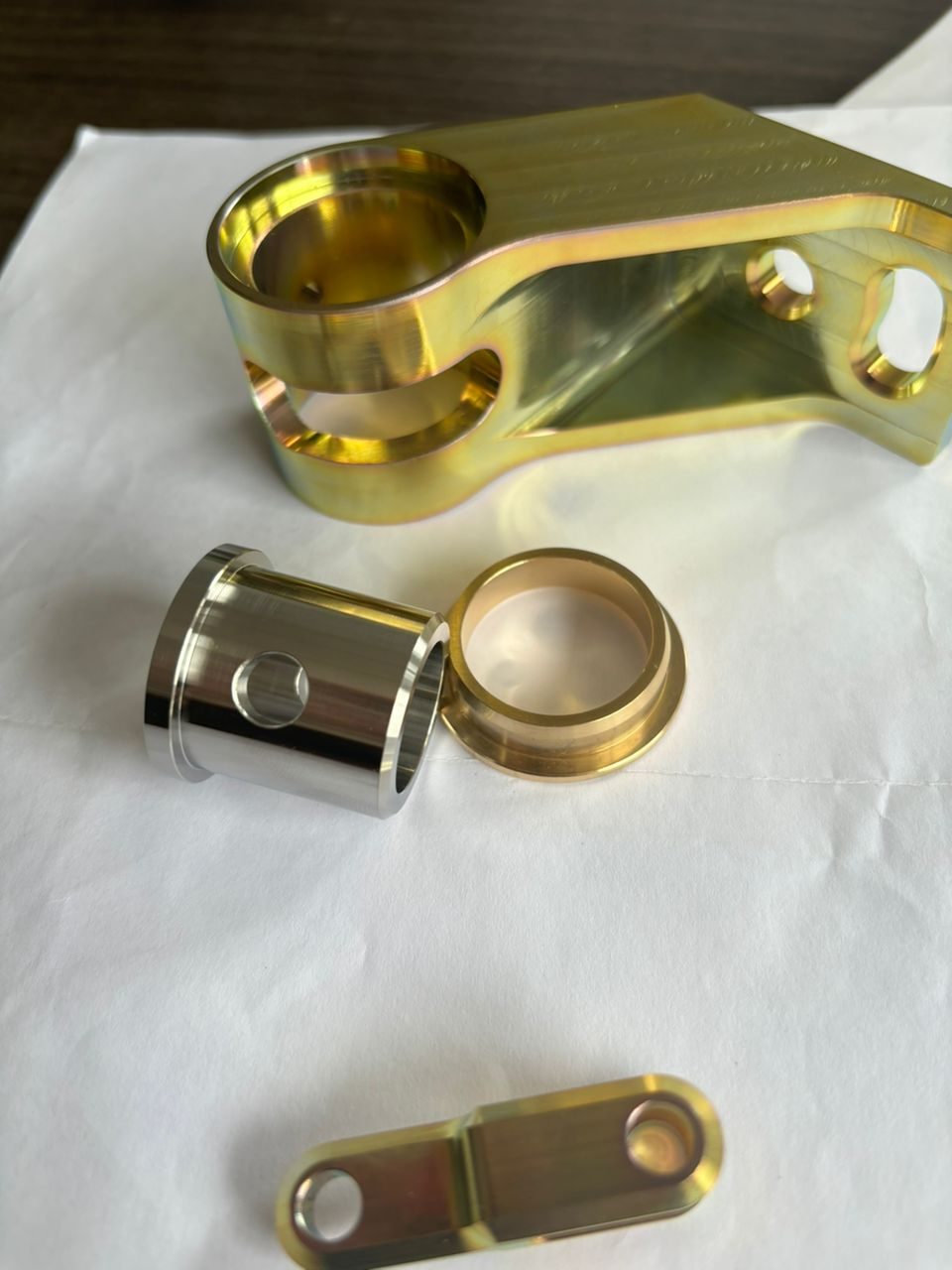
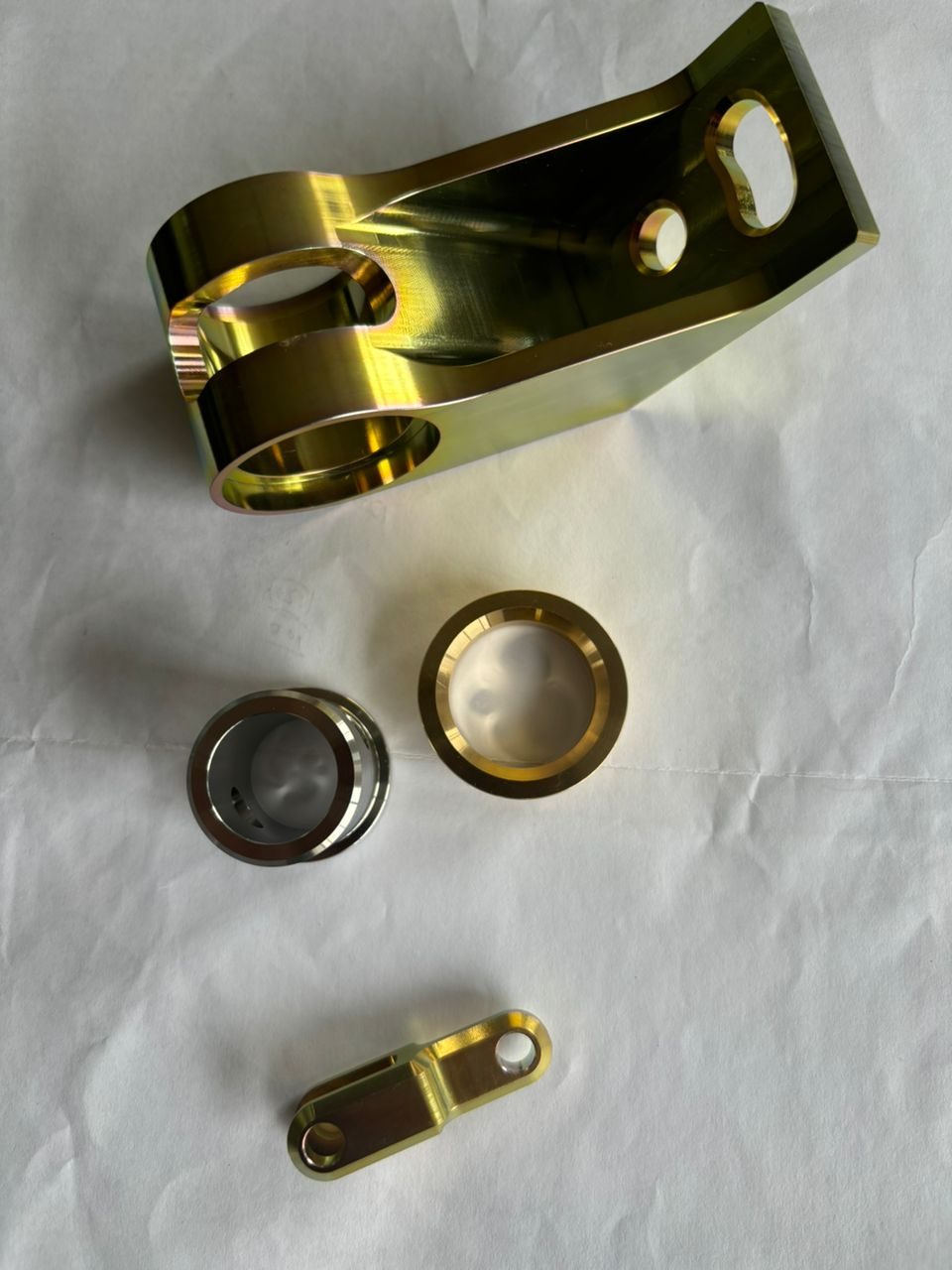
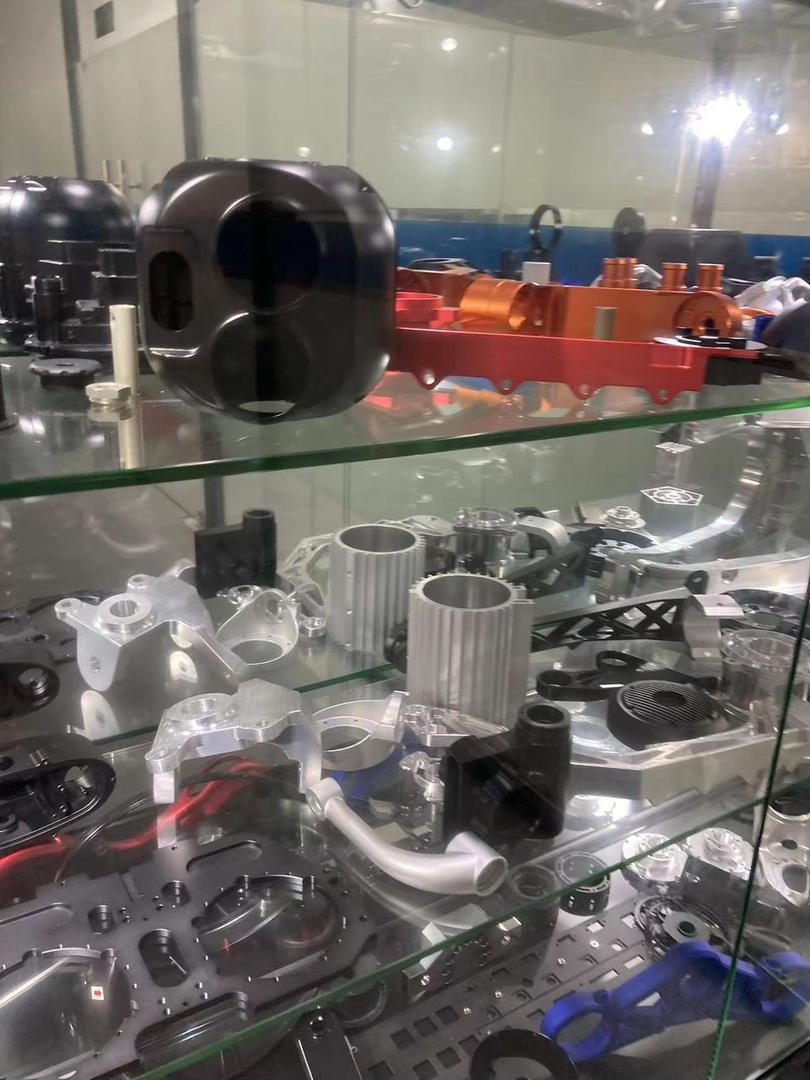
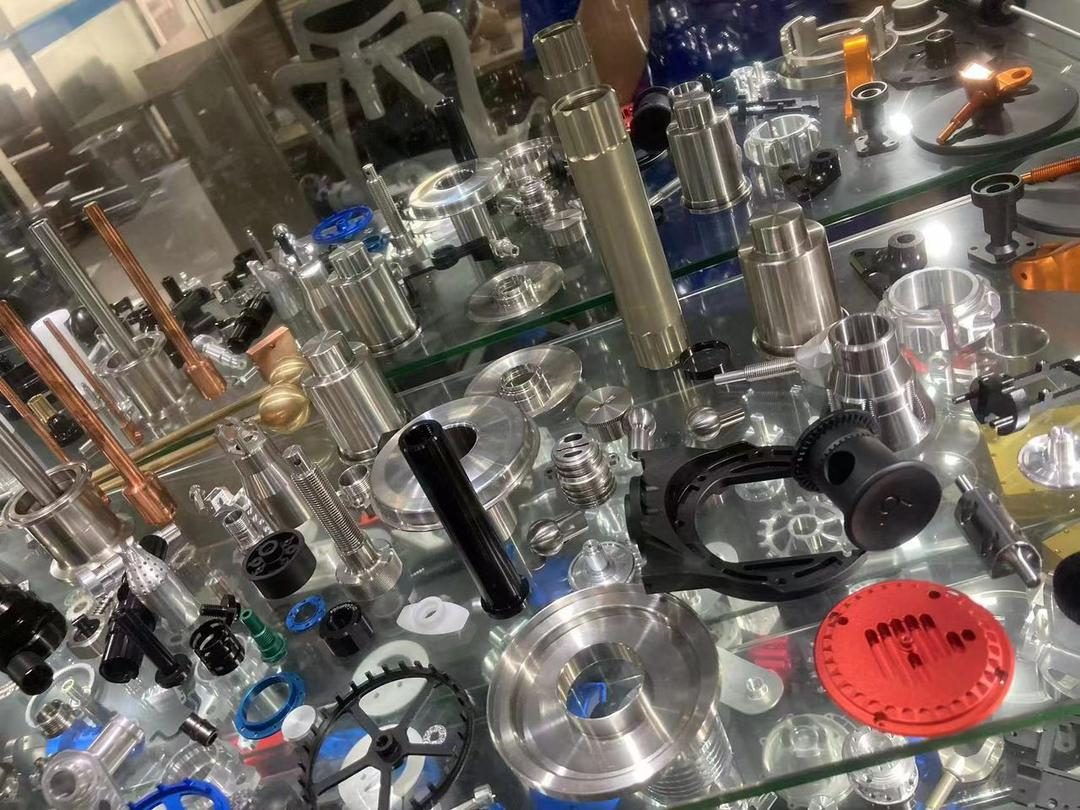
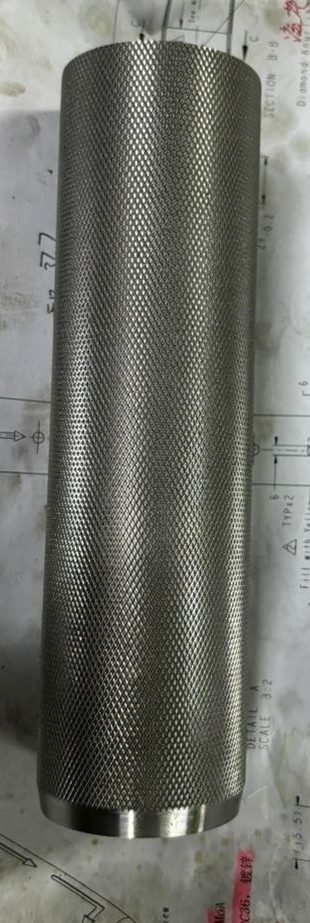
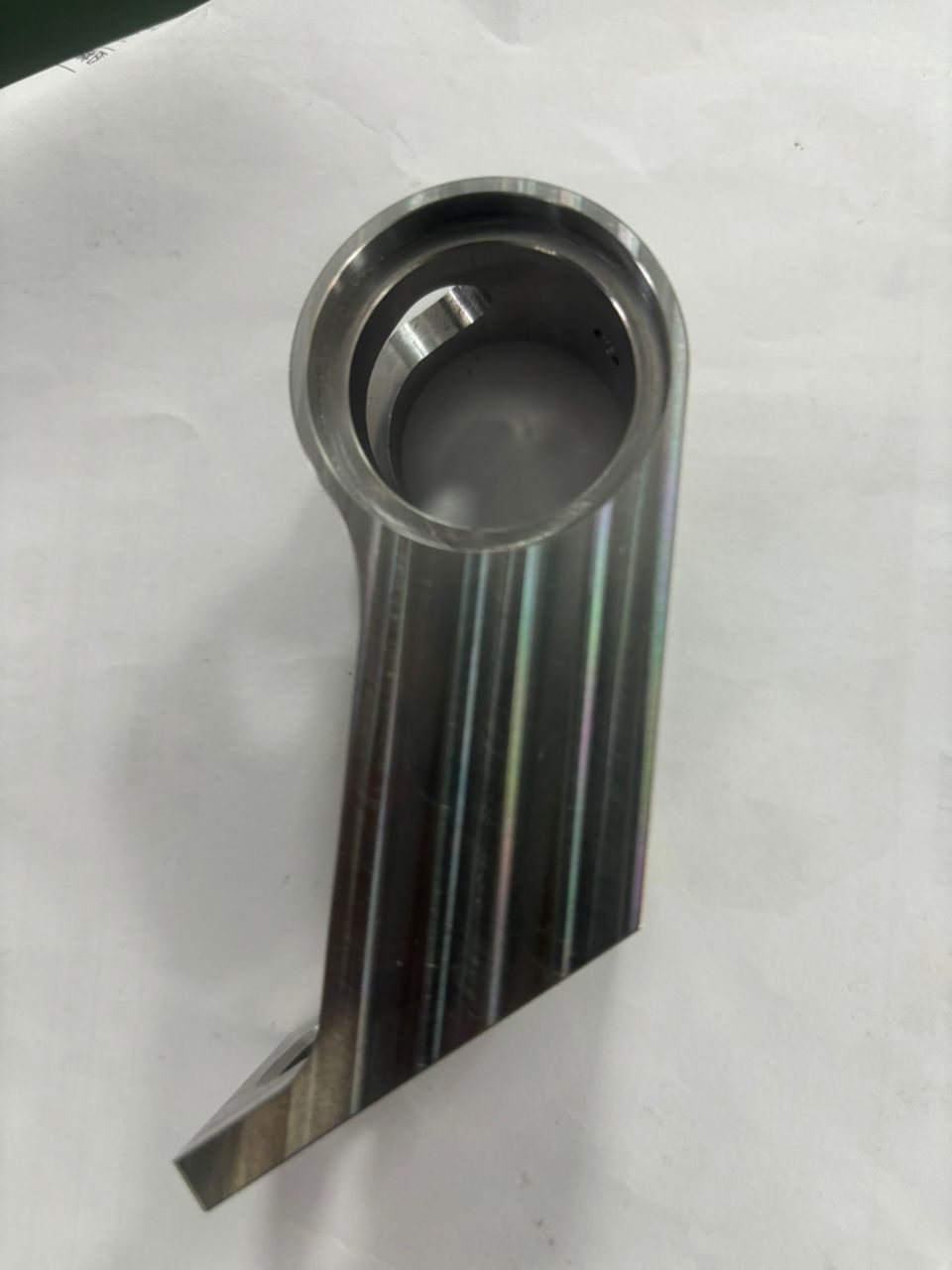
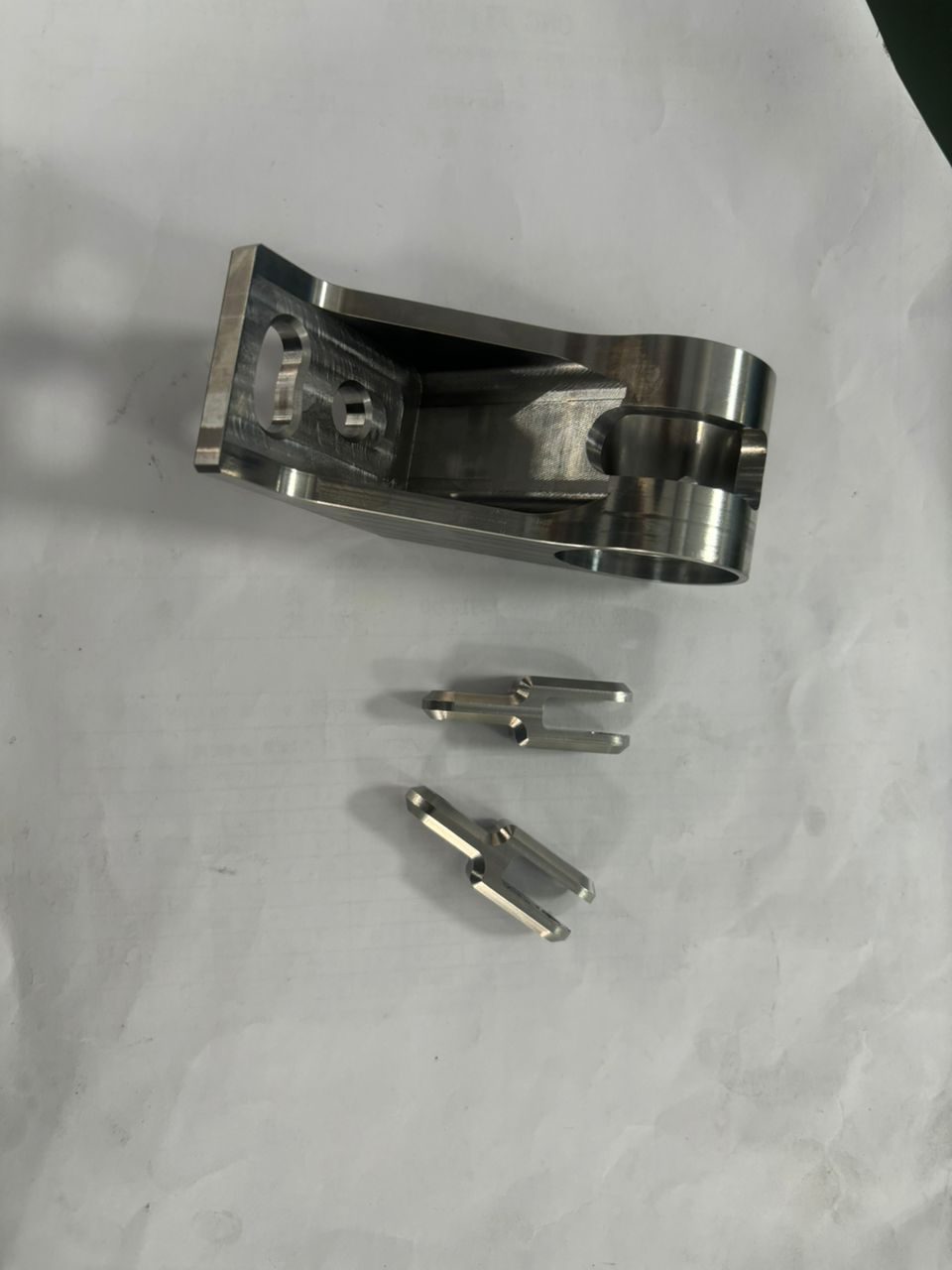
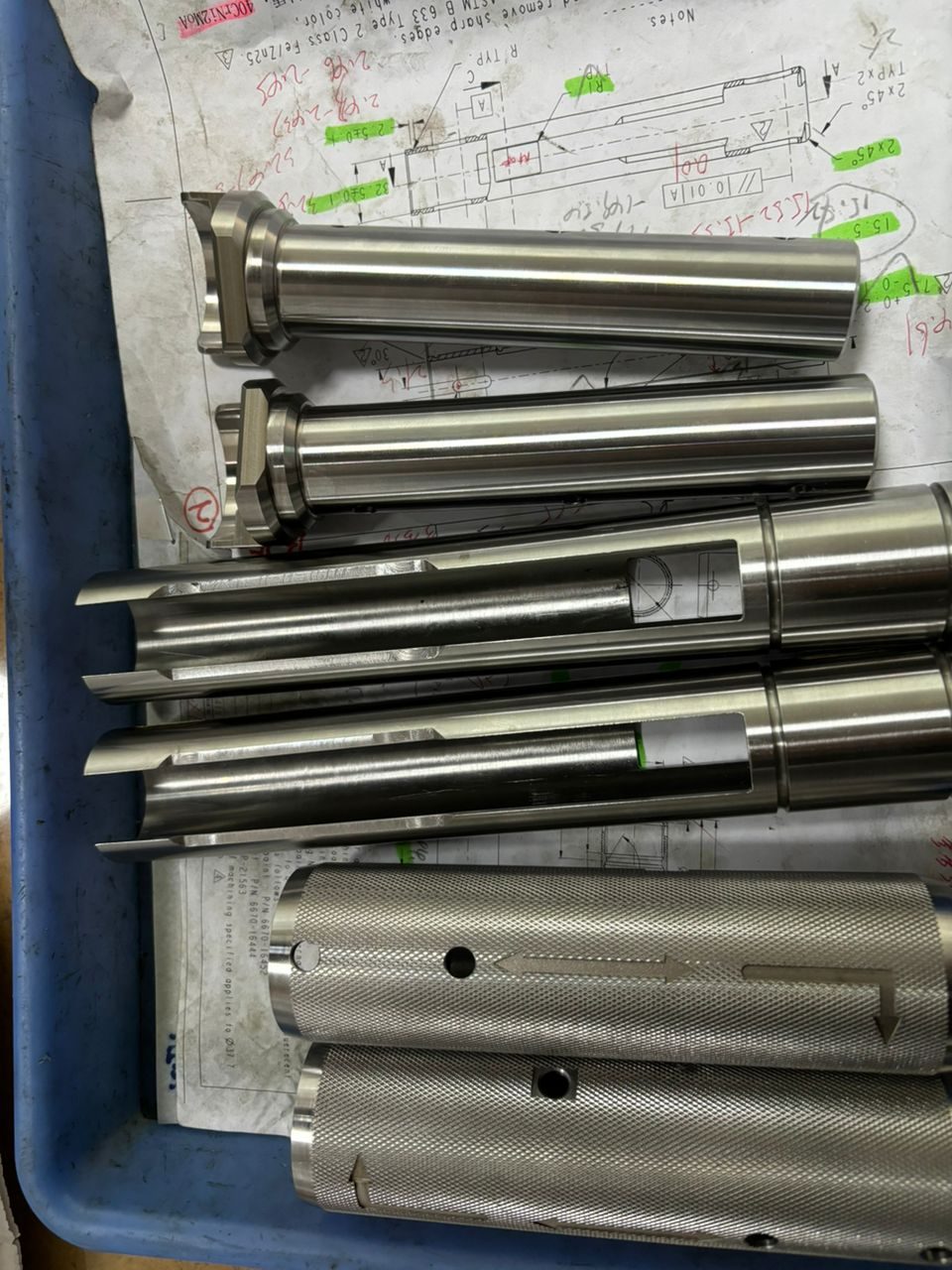
On our factory floor
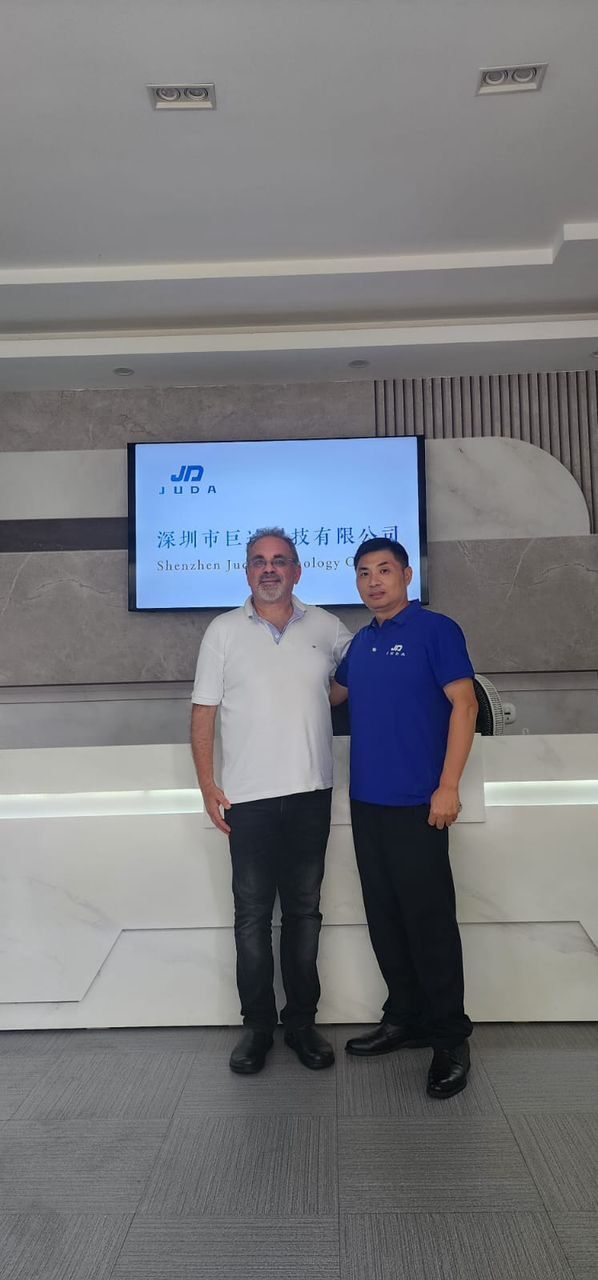
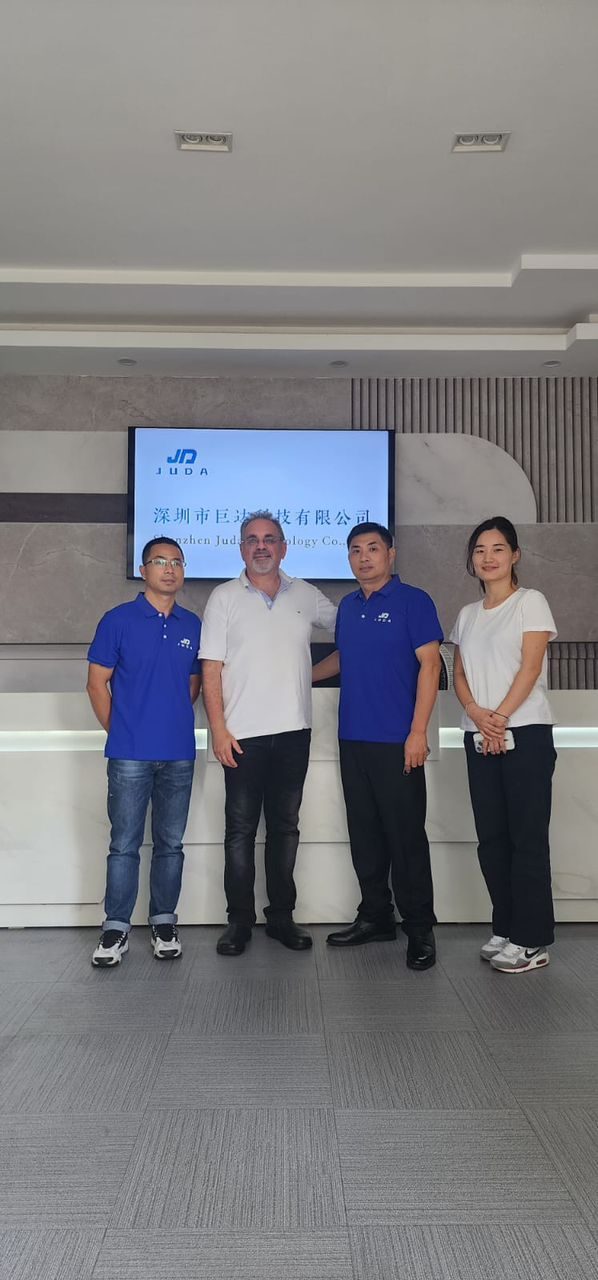
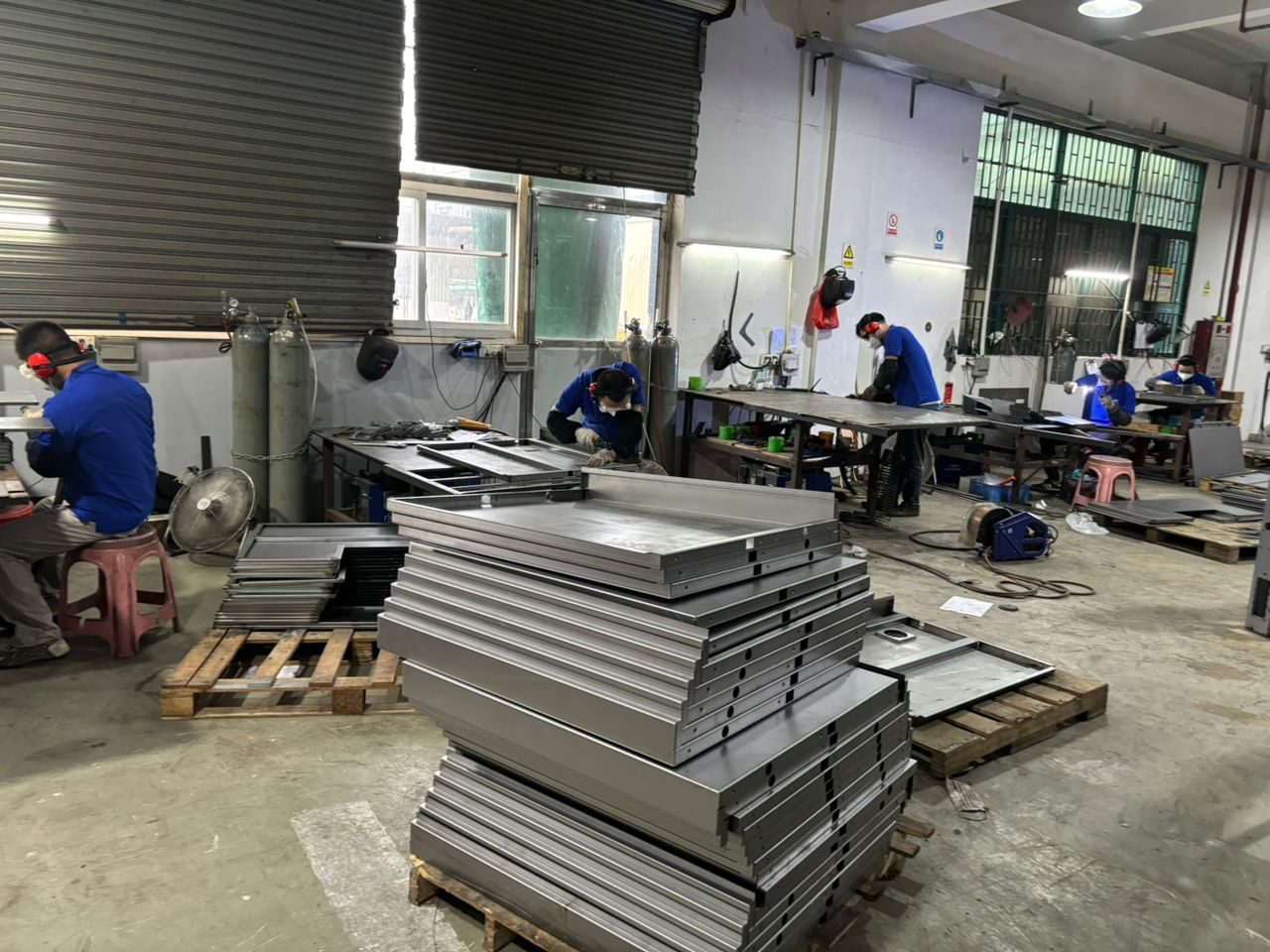
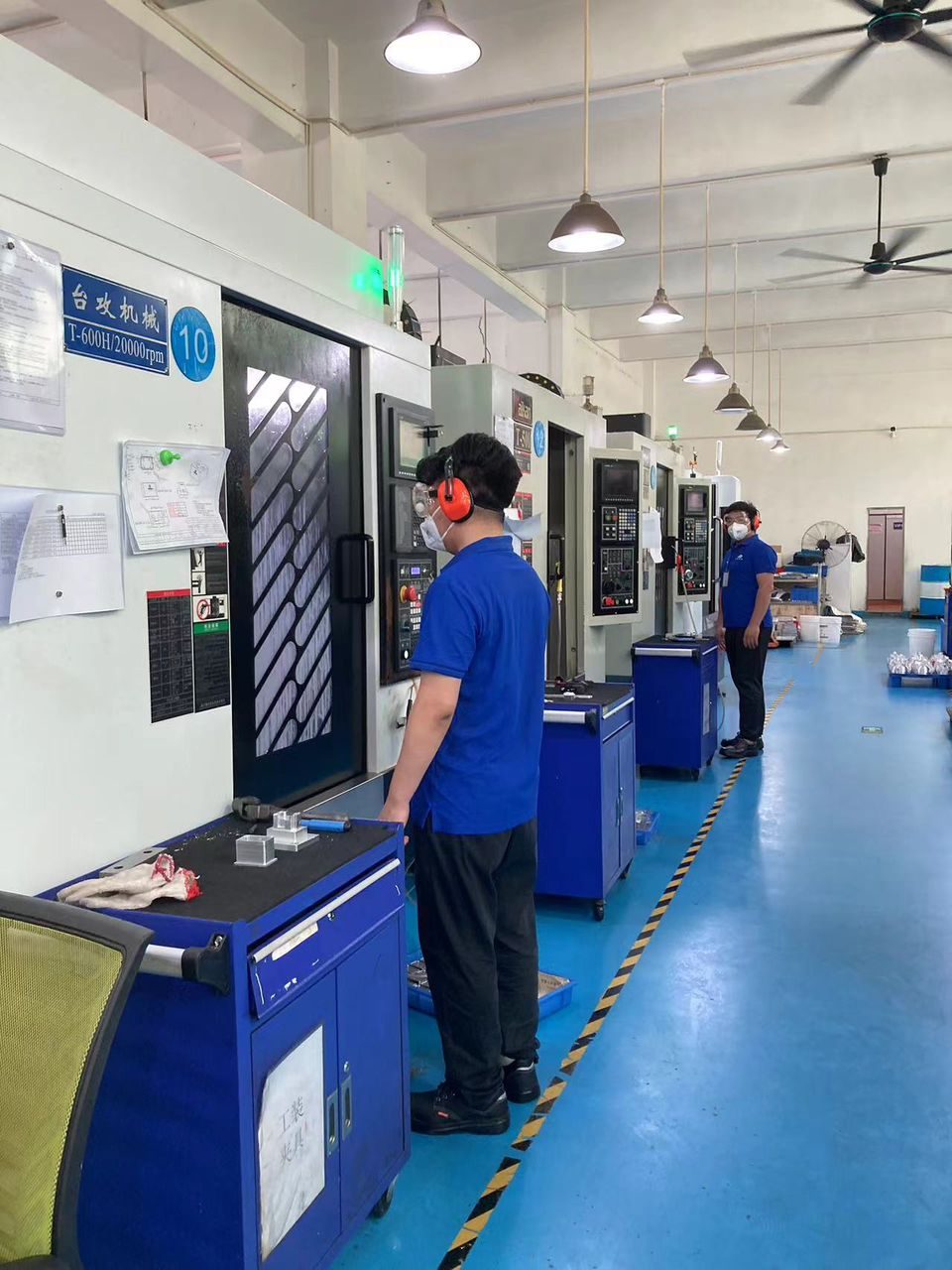
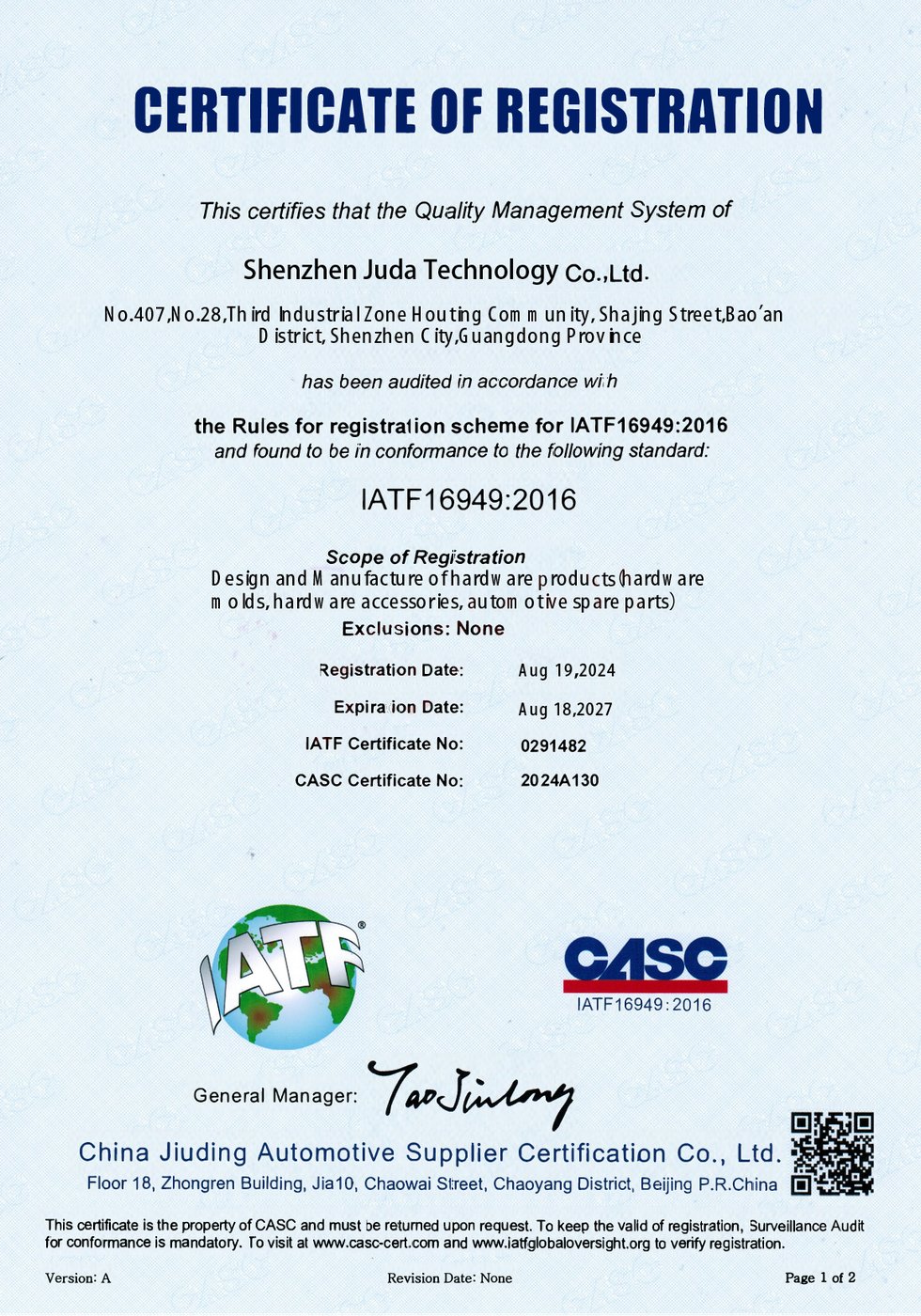
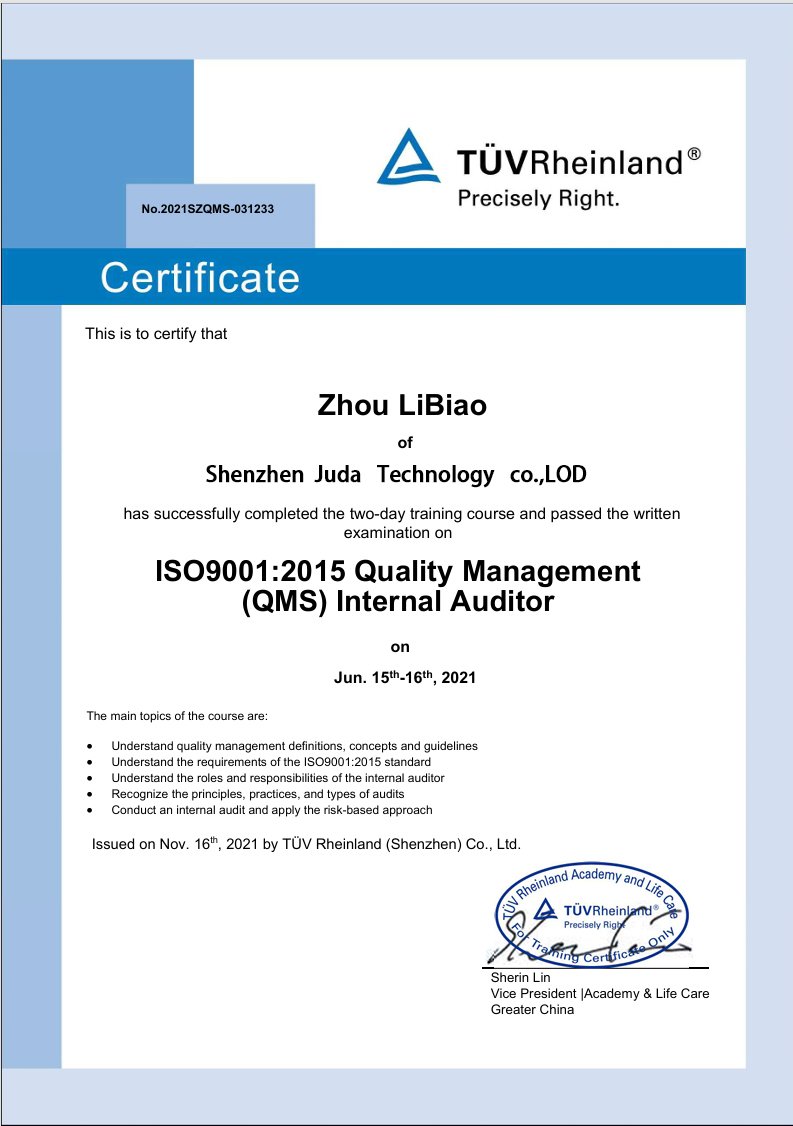
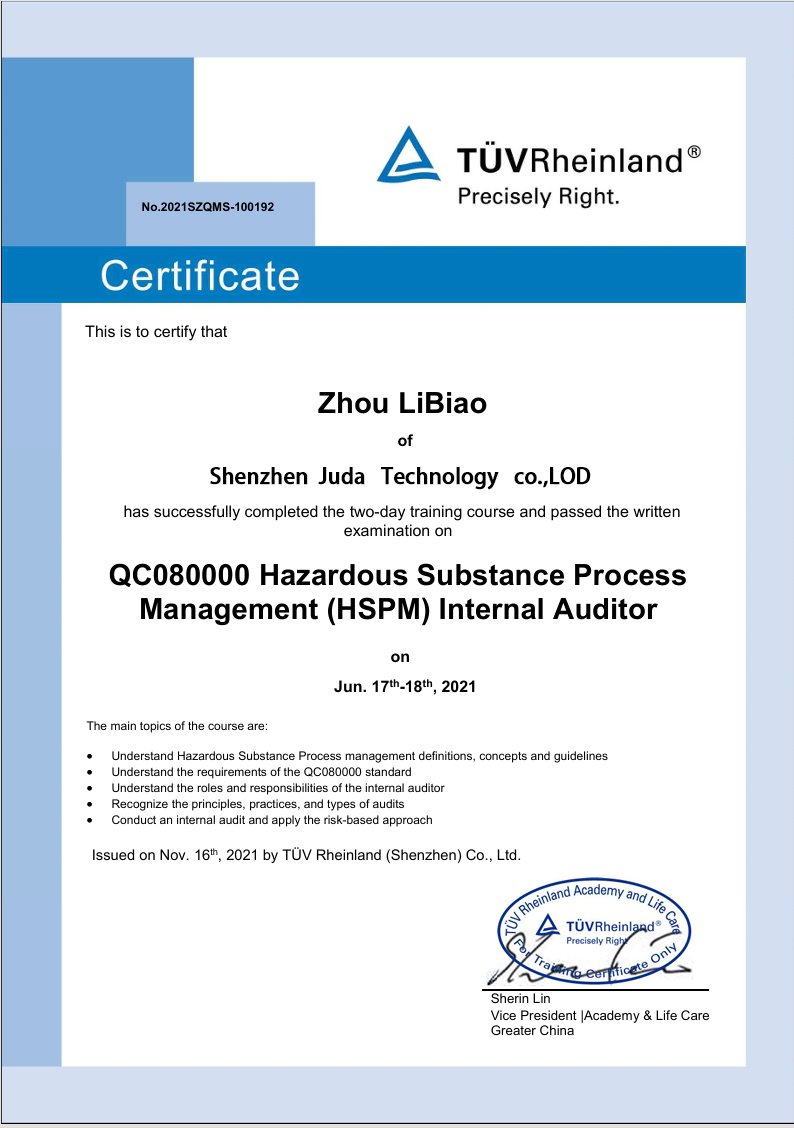
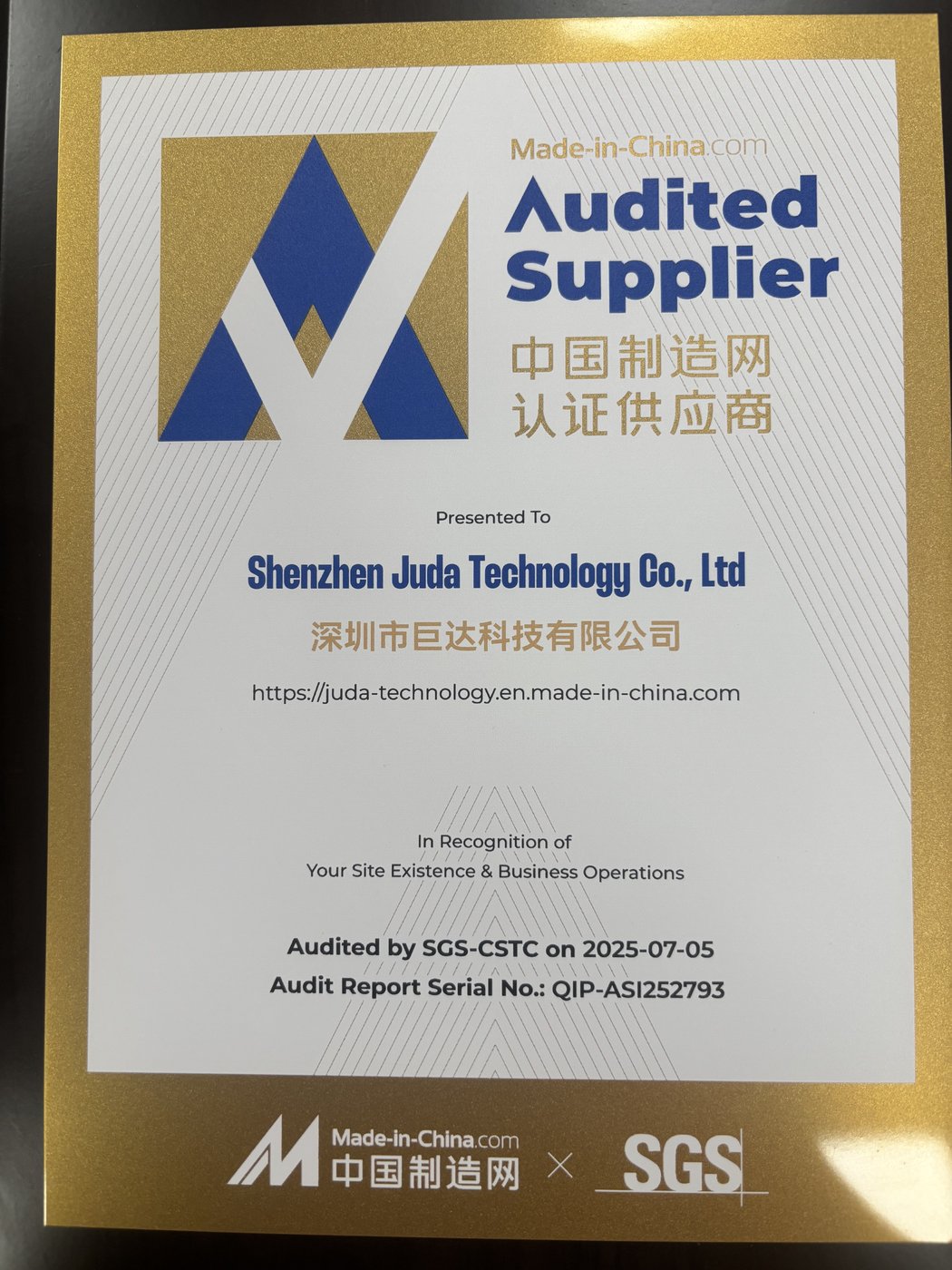
Certified quality — verifiable
Click any certificate to view the full document.
Frequently Asked Questions
Which aluminum alloy should I choose for my CNC part?
6061-T6 is the default for general-purpose engineering — it offers a great balance of strength, weldability, machinability, and corrosion resistance, and is the lowest cost. Choose 7075-T6 for aerospace or high-stress structural parts where you need maximum strength-to-weight (but cannot weld). Choose 2024 for fatigue-loaded aerospace components. Choose 5052 or 5083 for marine corrosion environments. Choose ADC12 for die-cast housings that will be machined post-cast. If unsure, send us your application requirements and we will recommend.
Can you anodize aluminum parts?
Yes. We offer Type II (decorative, 5-25 µm, full color range), Type III hardcoat (wear-resistant, 25-100 µm), chromate conversion (paint primer / corrosion barrier), and powder coating (durable colored finish). Specify thickness, color, and any masking requirements with your drawing.
What is the difference between 6061 and 7075?
6061-T6: tensile 310 MPa, weldable, lower cost, anodizes cleanly. The default choice. 7075-T6: tensile 570 MPa (nearly steel-strength at 1/3 the weight), NOT weldable, slightly higher cost, used for aerospace structural and high-performance applications. If your part will be welded, 7075 is not an option — use 6061 or design for fasteners.
What tolerances can you hold on aluminum?
We routinely hold ±0.005mm (±0.0002") on critical features using our 5-axis CNC centers. Even tighter tolerances (±0.003mm) are achievable on simpler features with controlled tool wear and in-process probing. Specify your required tolerances on the drawing and we will confirm capability.
How fast can you deliver aluminum prototypes?
Aluminum prototypes (1-5 parts) typically ship in 24-72 hours from approved 3D model and drawing. Same-day quotes are standard for parts under 200mm in any dimension. For larger or more complex parts, we will confirm exact lead time in our quote.
Do you stock aluminum bar and plate?
Yes. We stock 6061-T6, 6082-T6, 7075-T6, and 2024 in common metric sizes (round bar 20-200mm, plate 10-100mm) for fast turnaround. Specialty alloys and sizes are sourced same-day from local Shenzhen distributors. Material lead time is rarely the bottleneck.
Discuss your project with an engineer.
Send us your CAD files and requirements. We will review manufacturability and reply with next steps.